Choosing & specifying
Electric, solar or heat pump: hot water for a bathroom
Most Maltese bathrooms get hot water from an electric storage boiler because nobody asked the question at the right moment. Here are the three alternatives the REWS grant scheme recognises, what it pays for each, and why Part A of the application has to go in before you buy anything.
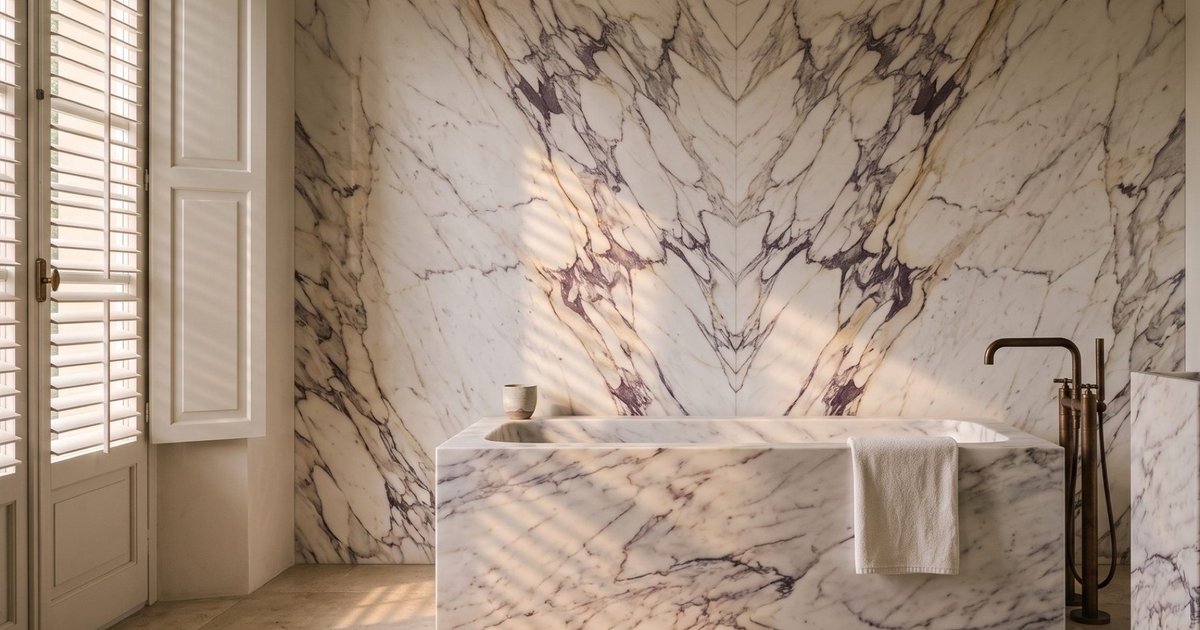
Most bathrooms in Malta get their hot water from an electric storage boiler, and most of the time nobody chose it. The plumber fits what the last one fitted. If you are redoing a bathroom in a shell-form property, this is one of the few moments when changing the answer is cheap, because the pipework and the electrical first fix are open anyway.
How entrenched the default is was measured a while ago. The University of Malta's Institute for Sustainable Energy, writing in 2013, cited an NSO survey of 1,500 households in which electric boilers were used in 90.5% of households and only 9.5% had a solar water heater. Those are dated figures and the picture will have moved, but the same paper noted that water heating accounted for 24% of household energy, which is why the question is worth five minutes of your time.
The four options
The grant scheme run by the Regulator for Energy and Water Services (REWS) recognises three alternatives to the plain electric storage boiler. The boiler itself is the baseline, not an option: it gets no grant.
| What it is | Grant option | |
|---|---|---|
| Electric storage boiler | Immersion element in an insulated tank, runs off the mains | None |
| Boiler plus dedicated PV panels | PV panels wired directly to a water heater | Option A |
| Solar water heater | Roof collector plus tank, sun heats the water itself | Option B |
| Heat pump water heater | Moves heat from the ambient air into the tank | Option C |
The 2013 paper took a typical electric boiler's overall efficiency as 0.75 — it is a resistance element, so there is no clever physics available to it.
Option A is the newest of the three. The point of wiring panels directly to a water heater, as reported when the package was announced on 10 April 2025, is that the household generates electricity for water heating only, and that generation does not count against their PV meter cap. If you already have, or plan, a conventional PV array, that distinction matters.
What the grant actually pays
The scheme is published as Call 2025/WH, funded nationally and administered by REWS. Before relying on any of this, check on servizz.gov.mt that the call is still open — the page we read did not publish a closing date, and we are not going to invent one.
The percentages are of the cost of the equipment itself, including VAT:
- Option A — boiler plus panels: 50% of the cost of the boiler plus panels, including VAT, capped at €700.
- Option B — solar water heater: 75% of the cost of the solar water heater itself, including VAT, capped at €1,400, plus a further €500 after five years towards maintenance, against a supplier's receipt.
- Option C — heat pump water heater: 50% of the cost of the heat pump water heater itself, including VAT, capped at €1,400.
If you find an older page quoting €1,000 for the heat pump, that is the previous cap. It was raised to €1,400 in the April 2025 package; the EU Clean Energy Islands page, for instance, still shows the older figure.
Eligibility is narrower than people assume. You must be the freehold owner or hold a long lease with more than five years left. The property has to be used mainly as the family's own home — not for business, not for commercial letting, and the applicant cannot be the landlord. The building must be covered by a permit, and planning permission is needed where it applies. You cannot hold another public or EU grant for the same system. Only one household member may claim per technology. REWS auditors may inspect, and your name and the grant may be published.
For solar water heaters there is a repeat-grant rule. Pre-2021 beneficiaries, and post-2021 beneficiaries whose tank was not stainless steel, can reapply after five years only if they move to a stainless-steel tank system or an equivalent. Post-2020 beneficiaries who already have a stainless tank become eligible again after ten years. An "equivalent" tank needs a ten-year retailer warranty plus a ten-year manufacturer warranty.
One more disqualifier worth knowing before you order: poor sun exposure can rule out a solar water heater or a boiler-plus-panels install.
The order: Part A before you buy
This is where people lose the money.
- Part A — the application. Must be submitted before purchase and installation. Since the 2025 package, Part A is automated, with immediate approval where the criteria are met.
- Buy, pay, install, commission.
- Part B — the reimbursement. Submitted after all of that, within the period set in the Government Gazette notice.
Part B wants: ID, an ARMS electricity bill for the address, in the applicant's name, on a domestic tariff; original fiscal receipts and invoices; photographs of the rating plates and of the installation; the PA permit where one was required; and a commissioning certificate from a warranted electrical engineer. Tell your plumber at the quoting stage that you need that certificate — it is easier to arrange before the job than after.
What was actually measured in Malta
For the heat pump option there is one piece of local evidence, and it is worth reading for what it is rather than as a general promise.
Researchers at the Institute for Sustainable Energy tested a single solar-assisted thermodynamic heat pump between November 2012 and January 2013, deliberately Malta's coldest months. That unit averaged a COP of 3.97 over the test period — the authors describe it as using roughly four times less electricity than an electric boiler. It performed well even on rainy and cloudy days, which they attribute to Maltese ambient temperatures rarely dropping below 5°C. Performance depended on inlet water temperature, air temperature and sunshine, and they suggested a timer running the unit during daylight hours would push COP higher still. They also cited earlier work finding an air-to-water heat pump could cut water-heating electricity by almost 70% compared with an electric boiler.
That is one unit, in one winter, in a 2013 conference paper. It is not a figure to apply to whatever is on a showroom shelf in 2026.
Why solar did not take over
The same paper explains the slow uptake of solar water heaters despite grants running since 2006 — about 2,000 new installations a year. The reasons are architectural rather than financial: the shift from terraced houses to apartment blocks cut the unshaded roof area available per household; storeys built later can shade collectors that worked fine when installed; and in scheduled areas and village cores, appearance is an obstacle.
If you are buying in an apartment block or a core village house, read that paragraph twice. It also explains the structural appeal of the heat pump: a heat-pump-type system can keep the storage tank inside the building, which removes the roof argument entirely.
Questions to put to the showroom or the plumber
- Which of the three grant options, if any, does this product fall under — A, B or C?
- Is there unshaded roof space for this address, and is any of it mine to use?
- Will you issue a commissioning certificate from a warranted electrical engineer?
- Will the invoice be an original fiscal receipt in my name, at the installation address?
- Where does the tank physically go, and does the bathroom layout I am about to build allow for it?
- For a solar water heater: is the tank stainless steel, and what warranty does it carry from the retailer and from the manufacturer?
- If I am buying across the water in Sicily, what documentation comes with it — and will it satisfy Part B?
That last one has no published answer, and the sources do not cover it. Ask REWS directly before you put a water heater on a ferry.
Common questions
- Do I have to apply for the grant before I buy the water heater?
- Yes. The scheme is split into two parts and Part A, the application, must be submitted before the purchase and installation. Part B, the reimbursement claim, goes in afterwards, once the system has been bought, paid for, installed and commissioned, within the period set in the Government Gazette notice. Buying first and applying later is the one mistake the published process does not forgive.
- How much does the grant pay for a heat pump water heater?
- Under Call 2025/WH, Option C pays 50% of the cost of the heat pump water heater itself including VAT, capped at €1,400. Older pages that still show a €1,000 cap predate the April 2025 announcement that raised it.
- Can I claim the grant on a flat I let out?
- No. The scheme is for a property used mainly as the applicant's own family home. It excludes business use and commercial letting, and the applicant cannot be the landlord. You must also be the freehold owner or hold a long lease with more than five years left to run.
- I already got a solar water heater grant years ago. Can I claim again?
- Only under specific conditions. Beneficiaries from before 2021, and those who received a grant after 2021 for a system with a non-stainless tank, can reapply after five years but only if they move to a stainless-steel tank system or an equivalent. Beneficiaries after 2020 who already have a stainless tank become eligible again after ten years.
What we could not establish
- No Maltese purchase prices were sourced for electric boilers, solar water heaters, PV-fed boiler kits or heat pump water heaters, so the article gives no indication of what you would actually pay or what the grant leaves you to cover.
- No running costs, bill savings or payback periods are published in the sources, and none are estimated here.
- The servizz.gov.mt page we read did not publish a closing date for Call 2025/WH, so we cannot say how long it runs or whether it is open on the day you read this.
- The sources do not say whether equipment bought in Sicily or elsewhere in the EU qualifies, nor how foreign invoices are treated by the Part B documentation requirements.
- Nothing in the sources covers condominium or common-roof consent for panels on an apartment block, which in practice is where many installations stop.
- There is no published list of eligible makes or models, and Maltese bathroom showrooms do not generally publish what water heating equipment they stock.
Sources
- A grant on the purchase of Water Heater Systems in the domestic sector – Call 2025/WH — servizz.gov.mt (Government of Malta) / Regulator for Energy and Water Services · read 2026-10-05
- Energy ministry announces new solar panel, water heating grants — MaltaToday · read 2026-10-05
- Performance of a solar-assisted thermodynamic heat pump for water heating (Yousif, Cubero, Debono, ISE Annual Conference 2013) — University of Malta, Institute for Sustainable Energy (OAR@UM) · read 2026-10-05
Ready to price it?
One upload goes to every showroom that stocks what you are after, in Malta and Sicily.
Get quotes