Quotes & installation
Hard water and limescale in a Maltese bathroom
Malta sits on limestone and drinks a blend of desalinated and groundwater, so scale on glass, nozzles and heating elements is normal rather than a fault. Here is what the Water Services Corporation says, what the fitting makers say, and where the two disagree.
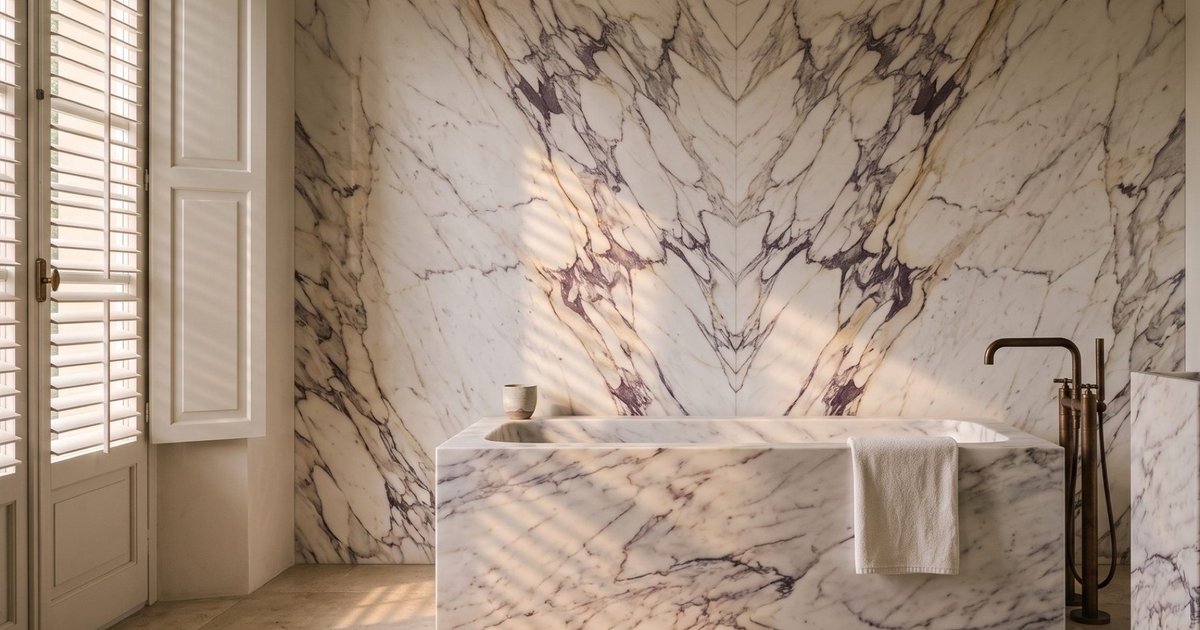
If you have just bought a property in Malta and you are specifying a bathroom, limescale is not an edge case to plan around later. It is the single environmental fact that will decide how your glass screen looks after six months, how your shower head sprays after two years, and how hard your water heater has to work. It is also the thing that most surprises buyers arriving from the UK or northern Europe, because the scale here is visible on a timescale of days.
Why the water is hard
The Water Services Corporation explains limescale as mineral deposits — mainly calcium carbonate — left behind when hard water, rich in calcium and magnesium, is heated or evaporates. Malta is largely limestone, so the island's water is naturally harder, and WSC says this is why scale shows up so readily on kettles, heating elements and washing-machine parts. The same chemistry is what dries into white spots on a chrome spout and a white film on shower glass.
What is actually coming out of the tap
Maltese tap water is a blend. MaltaToday, reporting WSC annual-report data for 2022 on 19 June 2023, says desalinated water (reverse osmosis) made up 64% of supply, up from 57% in 2017, with groundwater at 36%, down from 43% in 2017. Total production was 35.5 million cubic metres. The groundwater side comes from 68 boreholes and 10 pumping stations in Malta and 37 boreholes and 2 pumping stations in Gozo. The same report notes that the salinity of tap water fell 17% in 2022 against the 2021 average.
The practical point for a homeowner is that what reaches your bathroom is a mixture whose character can vary, and the groundwater component is the part that has been sitting in limestone.
The numbers — and who is publishing them
The WSC limescale page we read gives no hardness figure. The only figure we found is commercial: Limescalefree, a Maltese company selling electromagnetic descalers, states that WSC's 2022 Annual Report gives an average hardness of 215 mg/L as CaCO₃ for distributed water, and that local guides put many areas between about 200 and 350 mg/L. The same page says central and northern localities — it names Mosta, Qormi, Birkirkara, Mġarr and St Paul's Bay — are very hard, while Gozo and the south are moderately hard.
We could not open the annual report to check any of that. Treat it as a seller's citation. If you need a hardness figure for a specification — for a softener sizing calculation, say — ask WSC directly rather than relying on a number that reaches you through a company selling the cure.
Safety, and the 50°C setting
WSC is explicit that limescale does not affect drinking-water safety, and that the supply, treated by desalination and blended with groundwater, meets EU drinking-water standards. The problem is mechanical and cosmetic.
Where it costs money is heat. Scale on a heating element makes an appliance work harder and use more energy; WSC says regular descaling restores efficiency. WSC's own tip is to set geysers and hot water systems to 50°C to reduce scale build-up. If you are commissioning a new bathroom, that is a free instruction to give your plumber on the day the heater is set up.
What it means when you choose fittings
Two things are worth asking a showroom about, and neither of them usually appears on a price list.
Nozzles you can clean. Scale clogs shower-head nozzles and drops the flow — the visible effects listed by Limescalefree are white spots on taps, dull chrome, clogged heads and reduced flow. Some heads are designed around this: hansgrohe's Crometta S LowPressure head, for example, uses QuickClean nozzles from which limescale can be rubbed off by hand. Ask whether the head you are being shown has a rub-clean nozzle system, and ask it as a specific question, because most Maltese showrooms publish no brand list and the detail will not be in any brochure you take home.
Whether you can get the care instructions. Ask for the maker's cleaning sheet before you buy, not after. It tells you what you are allowed to put on the finish, and that turns out to be the real constraint.
Our sources do not establish which finishes — chrome, brushed, matt black — show spotting least or survive descaling best, so we will not pretend to know.
Cleaning chrome and shower heads
hansgrohe's guidance, for its own taps and showers, is specific:
- Use a mild citric-acid-based cleaner.
- Never use hydrochloric acid, formic acid, chlorine bleach or acetic acid.
- No abrasive cleaners, no scouring sponges.
- Never spray cleaner directly onto the fitting. Spray it onto a soft cotton cloth and wipe.
- Leave the cleaner on no longer than 10 minutes, then rinse thoroughly with clean water.
- On overhead showers, only the metal spray disc is dishwasher-safe; plastic parts would be damaged.
That last line matters in Malta, where putting the spray plate through a dishwasher cycle is a tempting shortcut. Take the disc off the head; do not put the whole head in.
The vinegar conflict
WSC's tips include using vinegar or lemon juice to dissolve scale on kettles, shower heads and taps. hansgrohe says never to use acetic acid — which is vinegar — on its fittings.
Both pieces of advice are honestly given and they are aimed at different things. WSC is talking about scale in general, including kettles and appliances. hansgrohe is talking about the surface of its own chrome and plastic parts, where the risk is damage to the finish rather than failure to shift the scale. Lemon juice sits on the citric-acid side, which is the direction hansgrohe points you in; vinegar does not.
The rule to take away: follow the care instructions of the company that made your fitting. If you have thrown the leaflet away, the maker's website carries it. If you have no idea which brand is on your wall — common in a resale or a landlord fit-out — use the gentlest method available and test on a hidden area first.
Softeners, filters and descalers
The options usually put in front of Maltese buyers are:
- Salt-based ion-exchange softeners.
- Drinking filters or reverse osmosis units at the point of use.
- Manual descaling with vinegar or citric acid.
- Electromagnetic descalers.
That list comes from Limescalefree, which sells the fourth item. We are not endorsing any of them, including softeners. Nothing in our sources tests how well any of these work on Maltese water, and the effectiveness of electromagnetic devices in particular should be checked against independent evidence before you spend money. If a supplier claims a performance figure, ask where it was measured and by whom.
If you are at shell stage, the useful decision is simply to leave space and a plumbing loop where a treatment unit could later go — that costs almost nothing now and is disruptive to retrofit.
A note on buying across the water
None of this changes depending on where you buy the tap. Sicily is a ferry ride away and often cheaper for the same Italian brands, and within the EU VAT is paid once, in the country of purchase. What does change is aftercare: a cartridge or a spray plate that needs replacing because of scale has to come from somewhere. If you are in Gozo, every delivery means a ferry, including the small ones. Ask where spare parts come from before you decide the saving is worth it — and note that our sources say nothing about parts availability for any brand in Malta, so that is a question for the showroom, not for us.
Common questions
- Is Maltese tap water safe to drink if it leaves this much limescale?
- WSC states that limescale is a natural mineral deposit that does not affect the safety of drinking water, and that the water — treated by desalination and blended with groundwater — meets EU drinking-water standards. Scale is a cosmetic and efficiency problem, not a health one.
- What temperature should I set the water heater to?
- WSC's own tip is to set geysers and hot water systems to 50°C, which reduces scale build-up. Scale on a heating element makes the appliance work harder and use more energy, so WSC also recommends regular descaling to restore efficiency.
- Can I clean my taps and shower head with vinegar?
- WSC suggests vinegar or lemon juice for scale on kettles, shower heads and taps. hansgrohe, for its own fittings, says never to use acetic acid (vinegar) and to use a mild citric-acid-based cleaner instead. The two pieces of advice conflict, so follow the care instructions of whoever made your fitting — the finish, not the water, is what gets damaged.
- How hard is Maltese water, in numbers?
- The WSC limescale page we read publishes no hardness figure. A Maltese descaler seller, Limescalefree, citing WSC's 2022 annual report, puts the average for distributed water at 215 mg/L as CaCO₃ and says local guides place many areas between roughly 200 and 350 mg/L. We could not open that report to verify it, so treat the number as a seller's citation rather than a published WSC statement.
- Will a water softener solve it?
- Softeners are one of several options and we cannot tell you how well any of them perform here. The commonly listed approaches are salt-based ion-exchange softeners, drinking filters or reverse osmosis, manual descaling, and electromagnetic descalers. None of our sources independently tests any of these, and the only page that lists them all is itself selling one of them, so ask for independent evidence before buying.
What we could not establish
- WSC's limescale page publishes no hardness figure at all. The only number we found — 215 mg/L as CaCO₃ — comes from a descaler seller citing WSC's 2022 annual report, which we could not open to verify.
- There is no independent, locality-by-locality hardness map for Malta and Gozo in our sources. The claim that Mosta, Qormi, Birkirkara, Mġarr and St Paul's Bay are very hard while Gozo and the south are moderately hard is the seller's, not WSC's.
- Nothing in our sources establishes whether the hardness at your tap changes with the seasonal RO-to-groundwater blend, or how the blend varies between distribution zones.
- No source establishes which tap or shower finishes (chrome, brushed, matt black, gold) show water spotting least or survive descaling best.
- No independent testing of electromagnetic descalers, nor of how much energy or heater life regular descaling actually saves.
- No source gives Maltese prices for softener supply or installation, or says whether bathroom showrooms fit them at all.
- No source states how often a Maltese water heater should be descaled, or whether warranties require it.
Sources
- Limescale: A Natural Occurrence, Not a Health Hazard — Water Services Corporation (WSC) · read 2026-10-05
- Nearly two-thirds of your tap water comes from the sea — MaltaToday · read 2026-10-05
- Water Hardness in Malta (descaling solution) — Limescalefree (Malta; seller of electromagnetic descalers) · read 2026-10-05
- Product cleaning tips (cleaning and maintenance FAQ) — hansgrohe (maker), hansgrohe.co.uk · read 2026-10-05
Ready to price it?
One upload goes to every showroom that stocks what you are after, in Malta and Sicily.
Get quotes